
When the first hard freeze hits Green Bay, your vehicle will tell you pretty quickly what you should have checked in October.
Maybe it’s the slow rrr-rrr-rrr when you turn the key. Maybe the tire-pressure light comes on after a cold night. Or maybe those brakes that sounded fine in September start squealing like they’ve got a personal grudge against you.
Ope.
Winter driving around Green Bay is tough on vehicles. Road salt collects underneath. Snow and slush work their way into brake components. Cold temperatures reduce battery power and tire pressure. A quick trip past Lambeau Field, across the Fox River, or down Highway 41 can turn into a long, stressful drive when your vehicle is not prepared.
That’s why we’re kicking off this eight-week series on preparing your vehicle for winter: one important system at a time.
The goal is simple: catch small problems before they become expensive, inconvenient, or unsafe.
Your 8-week winter preparation roadmap
Here’s what we’ll cover over the next eight weeks:
- Week 1: Battery testing and starting power
- Week 2: Tires, tread, and tire pressure
- Week 3: Brakes, rotors, and stopping safely
- Week 4: Oil, coolant, and winter fluids
- Week 5: Wipers, lights, and defrosters
- Week 6: Belts, hoses, charging systems, and exhaust
- Week 7: Road salt, rust, and underbody corrosion
- Week 8: Emergency supplies and the final comprehensive vehicle check
You don’t have to wait eight weeks to address a serious issue. If your vehicle is already showing warning signs, get it checked now.
This schedule simply gives you a practical order of operations.
Why start eight weeks before winter?
Green Bay weather does not always ease into winter politely.
One week can bring sunshine and 60-degree afternoons. The next can bring freezing rain, heavy wind, and a morning commute that looks like it belongs in January. Businesses also need time to inspect fleet vehicles before service calls, deliveries, and employee commutes become more difficult.
A little planning now helps you avoid the November rush.
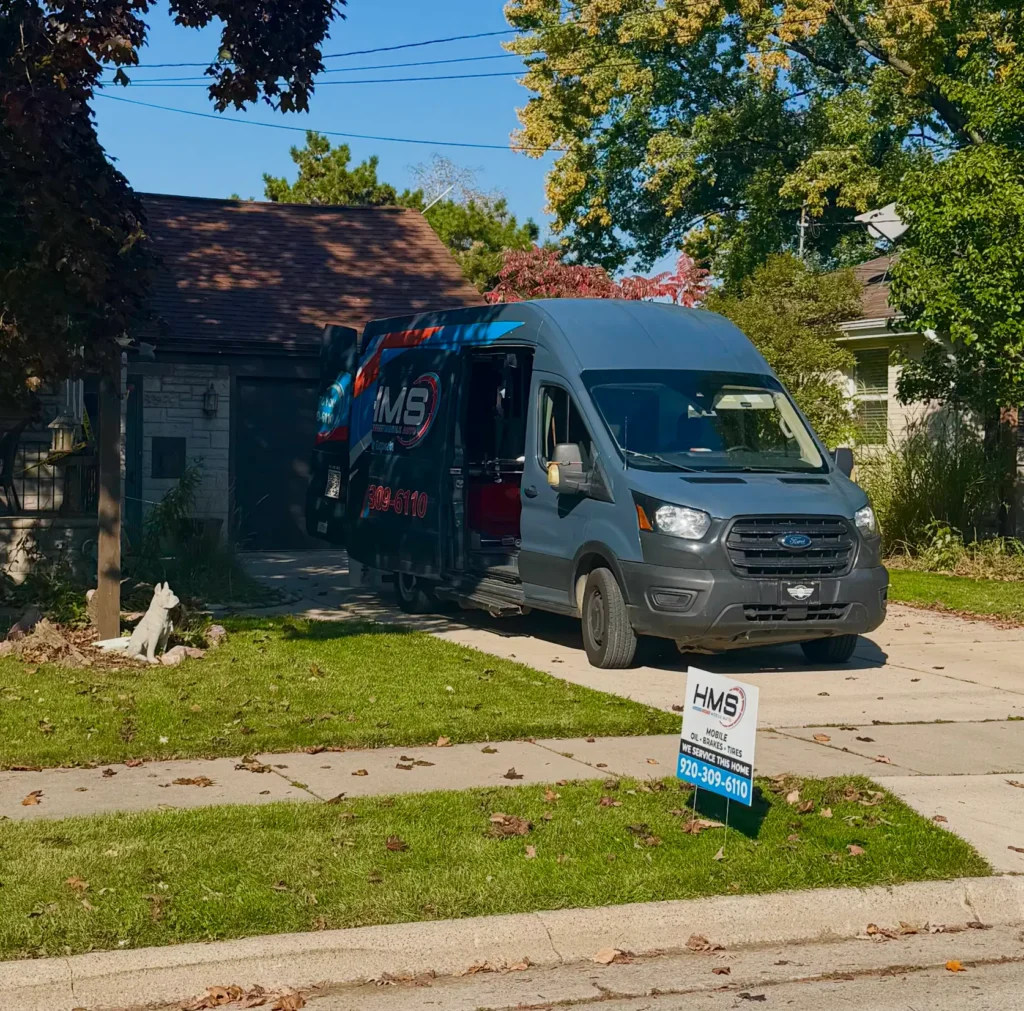
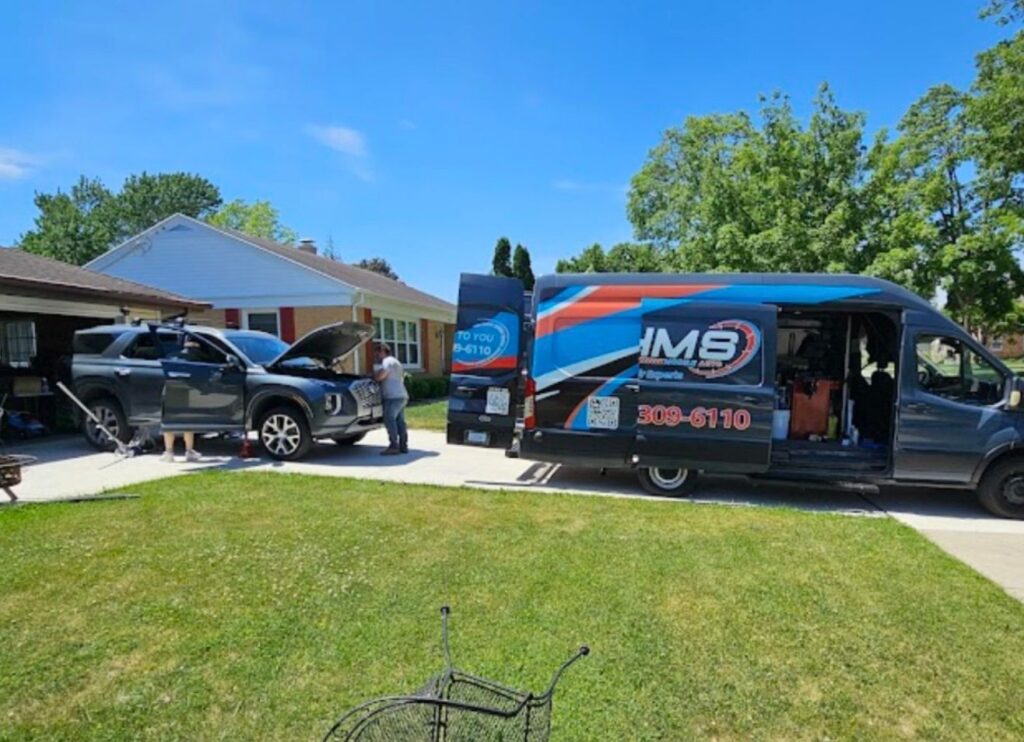
At HMS Mobile Auto, our local team brings the service truck to your driveway, workplace, parking lot, or fleet location. You don’t have to arrange a ride to a traditional shop or lose half a day waiting for an appointment.
We come to you because, yah hey, you already have enough to manage.
Week 1: Test your battery before the deep cold arrives
Cold weather exposes weak batteries.
A battery that starts your vehicle reliably in October may not have enough reserve power when temperatures drop below freezing. Cold slows the chemical reaction inside the battery, while your engine requires more power to crank.
Watch for:
- Slow engine cranking
- Clicking when you turn the key
- Flickering interior or dashboard lights
- Corrosion around the battery terminals
- A battery that is several years old
- The need for repeated jump-starts
A battery test should include more than a quick glance under the hood. The battery, terminals, cables, and charging system all matter.
NHTSA recommends having a mechanic check the battery and charging system before winter. If your battery is already marginal, it is much better to replace it in your driveway than in a grocery-store parking lot during a snowstorm.
Week 2: Check tires, tread, and pressure
Your tires are the only part of your vehicle touching the road.
That matters when Green Bay roads are covered with snow, slush, ice, or a thin layer of saltwater that looks harmless but handles like a skating rink.
Check:
- Tread depth
- Uneven wear
- Cracks, bulges, or sidewall damage
- Tire age
- Spare-tire condition
- Tire pressure
Cold temperatures lower tire pressure. Use the pressure listed on the driver’s door-jamb label, not the maximum pressure printed on the tire sidewall.
If you regularly drive outside the city, commute early in the morning, or travel between Green Bay, Appleton, Fond du Lac, and Oshkosh, consider whether winter tires make sense for your vehicle and driving habits. Proper tread and the right rubber compound can make a noticeable difference in snow and cold.
And remember: all-wheel drive helps you accelerate. It does not magically shorten stopping distance.
Week 3: Inspect brakes before salt and moisture do more damage
Rusty brakes are common in the Rust Belt, and winter can make the problem worse.
Road salt and moisture collect around brake rotors, calipers, backing plates, and brake lines. A little surface rust may be normal after sitting overnight. Heavy corrosion, sticking calipers, or deeply pitted rotors are different stories.
Pay attention to:
- Squealing or grinding
- A pulsating brake pedal
- Pulling to one side
- A soft or spongy pedal
- A burning smell after driving
- A vehicle that seems reluctant to roll freely
That squeal you hear while backing out of the driveway may just be surface rust. Or it may be an early warning that the pads, rotors, or calipers need attention.
A brake inspection looks at the whole system, not just pad thickness. We also want to know whether corrosion is affecting operation and whether brake fluid is in good condition.
You want dependable brakes before traffic backs up around Lambeau Field or you meet an icy bridge deck on your morning commute.

Week 4: Review oil, coolant, and other fluids
Fluids play a big role in how your vehicle handles Wisconsin cold.
During this week, check:
- Engine oil level and condition
- Coolant level and freeze protection
- Brake fluid
- Transmission fluid, when applicable
- Power-steering fluid, when applicable
- Windshield washer fluid
Your engine oil should match the manufacturer’s specifications for your vehicle and climate. The correct oil helps the engine turn over more easily during cold starts.
Coolant does more than keep the engine from overheating. It also protects against freezing and helps provide heat for the cabin. A low level, weak mixture, or leak should be addressed before winter.
And please do not wait until the first snow to discover that your washer fluid is rated for summer temperatures. Use winter fluid with freeze protection, especially if your vehicle spends time outside overnight.
Week 5: Make sure you can see, and others can see you
Snow, road spray, salt film, and early sunsets are a rough combination.
Replace wiper blades that streak, chatter, split, or leave untouched sections across the windshield. Fill the reservoir with winter-rated washer fluid. Check that the front and rear defrosters work properly.
Then walk around the vehicle and test:
- Headlights
- Brake lights
- Turn signals
- Hazard flashers
- Reverse lights
- License-plate lights
- Fog lights, if equipped
WisDOT recommends clearing snow and ice from the entire vehicle before driving, not just a small circle on the windshield. Clear the roof, hood, windows, mirrors, lights, and cameras. Snow flying off your vehicle can create a hazard for the driver behind you.
Week 6: Check belts, hoses, charging components, and exhaust
Cold weather can be hard on aging rubber and electrical components.
During a broader inspection, look for:
- Cracked or glazed belts
- Soft, swollen, or leaking hoses
- Loose battery cables
- Charging-system concerns
- Exhaust leaks
- Damaged heat shields
- Unusual engine noises
An exhaust leak deserves attention in any season, but it is especially important during winter when windows stay closed and vehicles may idle more often. Never run a vehicle in an enclosed garage, and keep the exhaust pipe clear of snow if you become stuck.
For fleet owners, this is a good week to inspect every work vehicle, not just the one that happens to be available. A small delivery or service fleet can lose valuable time when one vehicle is down during a busy weather week.

Week 7: Look underneath for salt damage and corrosion
This is where Wisconsin vehicles often need the most honest attention.
Road salt does its job on slippery roads, but it also accelerates corrosion underneath your vehicle. Brake lines, fuel lines, exhaust components, suspension hardware, and fasteners can all suffer.
Look for:
- Flaking or bubbling rust
- Salt buildup around brake components
- Rusted brake lines
- Exhaust corrosion
- Leaking fluid
- Damaged splash shields
- Uneven or loose suspension components
You do not need to crawl under your vehicle in the snow to inspect everything yourself. That’s exactly where a professional inspection helps.
Washing the underbody after salty conditions can reduce buildup. But cleaning does not repair existing corrosion. If a component is badly rusted, it should be evaluated before a winter failure leaves you stranded.
Week 8: Build your emergency kit and complete the check
Even a well-maintained vehicle can encounter a bad patch of weather.
WisDOT recommends carrying supplies such as blankets, warm clothing, a flashlight, jumper cables, water, food, a first-aid kit, a scraper, and sand or cat litter for traction. Keep important supplies where you can reach them if the trunk is frozen shut.
Before longer trips, check 511 Wisconsin for road conditions and incidents. WisDOT also recommends extra following distance, slower speeds, and avoiding cruise control in wintry conditions. You can review its full winter driving guidance before the season gets serious.
At the end of Week 8, bring everything together:
- Battery and charging system
- Tires and tire pressure
- Brakes
- Oil and coolant
- Washer fluid and wipers
- Lights and defrosters
- Belts, hoses, and exhaust
- Corrosion and underbody condition
- Emergency supplies
That is what we mean by a comprehensive vehicle check. It is not one quick glance at the engine bay. It is a practical look at the systems you rely on when roads are slick, temperatures drop, and help may take longer to reach you.

We’ll bring the winter check to you
HMS Mobile Auto serves drivers and businesses throughout Oneida, Ashwaubenon, Howard, Downtown Green Bay, Bellevue, De Pere, Wrightstown, Ledgeview, Appleton, Fond du Lac, and Oshkosh.
Our HMS service truck can pull up at your home, workplace, or fleet location for convenient maintenance and inspections. We have more than 15 years of industry experience, and we’ve helped over 1,000 customers complete more than 1,500 services.
So don’t let that salt sit too long. Don’t ignore the slow start or the squealing brake. And don’t wait for the first big storm to find out your wipers are worn out.
Start with Week 1: test the battery.
Then follow along each week as we work through the rest of your vehicle’s winter preparation: one practical check at a time. For mobile maintenance and service in Northeast Wisconsin, visit HMS Mobile Auto.